
Time sure is flying by, but also, that was the longest September of my life??
Anyways! We’ve been assigned a creative media presentation that we must organize in a group and present to the class in mid-November. Add it to the to-do list 🤯
That’s okay, we always get through it, don’t we? Don’t we….?
Our group has decided to research the different aspects of high tech vs. low tech vs. no tech in classrooms. What does that mean? Well, we’re not sure. We do have ideas though! Such as implementing high tech in classrooms as a form of assistive learning technology to make learning easier for those with diverse needs, or low tech as a form of accessibility without kids being glued to screens, or no tech where learning is done “old school”, perhaps that means more outside time or more hands-on time.

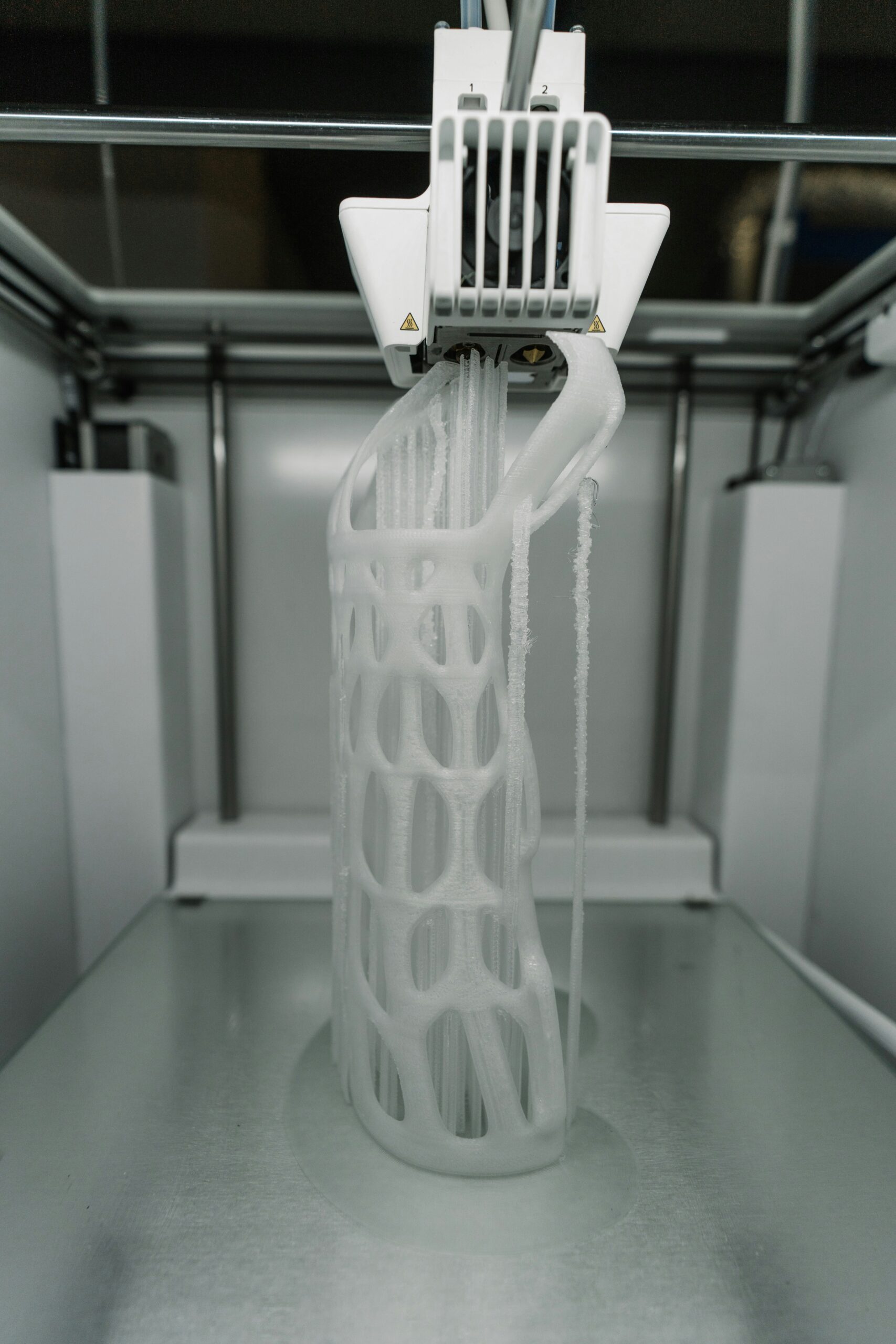
My personal bias is normally low to no tech, but I do remember taking a CAD/CAM (Computer-Aided Design/Computer-Aided Manufacturing) class while I was doing a bachelor of design with a specialty in the dying craft of Jewelry-Making. I strongly despised that class for almost the entirety of it because I couldn’t just physically manipulate the object I was creating. It drove me bonkers. And then one day I got it. I got the hang of it, and ended up making something really cool that my prof insisted that I was a part of an art show he was putting on separate from the university. It was with tons of designers and artists from the Toronto area who were experimenting with 3D printed wearable art. This was back in 2010 when 3D printing was rare and expensive. But, in seeing all of the creations during the show, I was inspired by the possibility of this frustrating technology and how it could be used to create custom-made accessibility devices. This was also around the time that my brother was in a bad mountain biking accident and ended up in a wheelchair. He had been struggling with cold and wet hands in the winter from wheeling himself around, which wore down his gloves, that never really stayed waterproof anyways. My brain started swirling with ideas of how to 3D print waterproof, durable gloves, that could endure the cold and protect from the wet while we wheeled himself around in the winter.

Image Description: Computer rendering of the 3D bracelet I designed. The bracelet has three parts, intertwined together, with some hollow parts. The external part of bracelet is white, internal part of bracelet is red.
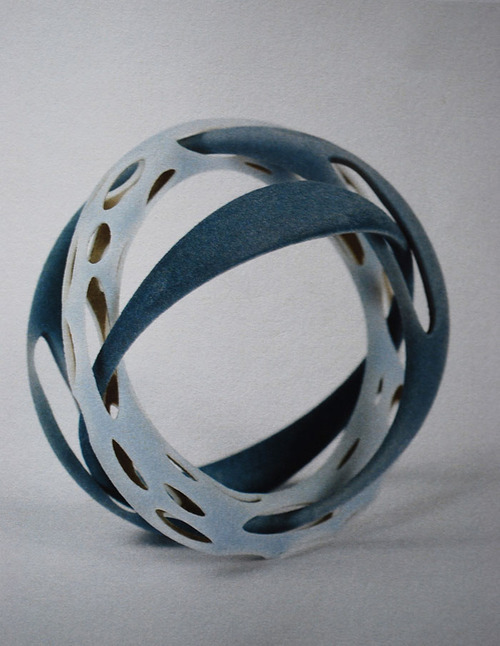
Image Description: 3D printed bracelet made of blue plastic that was a part of the gallery show. The bracelet has three parts, intertwined together, with some hollow parts. The external part of bracelet is white, internal part of bracelet is red.
Although I dropped out of design school (typical, am I right?), that stuck with me. While I despise how technology has ruined a lot of things, it also has the possibility to make things better. Its just how you use it.
We also got to go to a school and spend some time making some silly little stop motion videos with some younger grade 3 elementary students. We used the app Stop Motion Studio to create the actual stop motion. The students all had little stuffed animal creatures that were the main characters in their stop motion. They were then given the freedom to make their own background and choose a theme, story, and character roles. In the image below you can see an example of how to integrate no tech with high tech in a classroom!
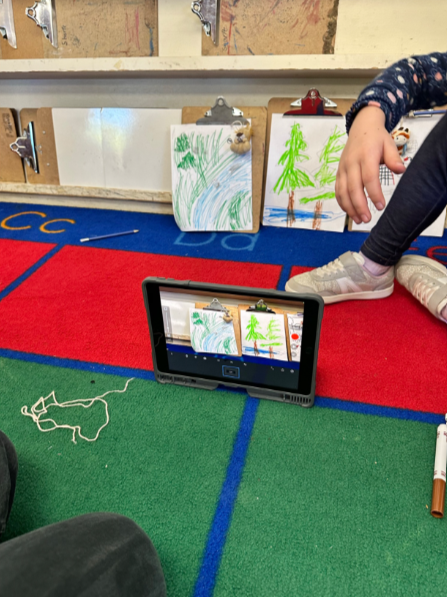
Now what? I remember doing stop motion videos when I was in elementary school, and the older elementary students came to our class to be helpers. I thought they were so cool and the stop motion could be as creative as you wanted it to be. Its definitely something I could see being used as a tool to explain how stories work (characters, theme, plot, problem, resolution, etc.). Definitely a cool tool!